
How to Improve Sleep Quality: Practical Tips That Work
Key Points
✓ Most adults need seven or more hours nightly
✓ Consistent sleep and wake times matter most
✓ Regular exercise helps you fall asleep faster
✓ Alcohol disrupts sleep later in the night
✓ Circadian rhythm controls when you feel sleepy
In This Article
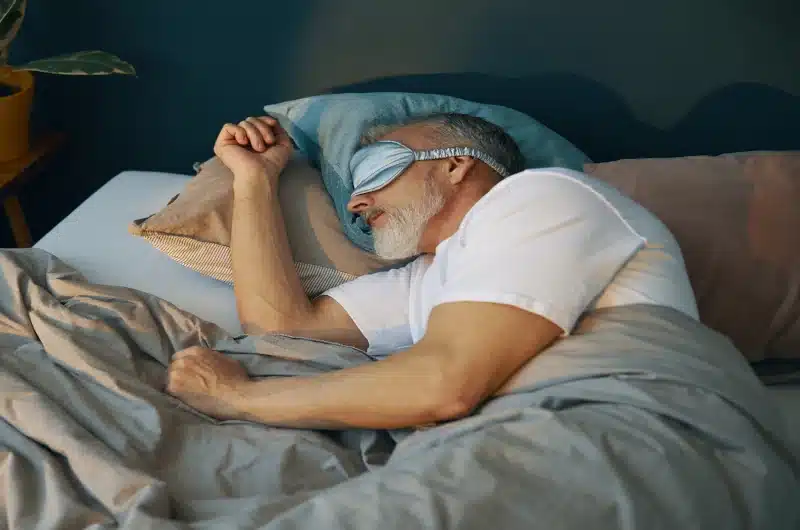
If you have been lying awake at night wondering why sleep is so hard to get, you are not alone. Learning how to improve sleep quality does not require a major overhaul. The most effective changes are usually simple and consistent: keep a steady schedule, get regular exercise, limit alcohol and caffeine, and build a calming bedtime routine. Most adults need at least seven hours of sleep each night, and small habit changes can make a real difference over time.
Why Improving Sleep Quality Matters
Sleep is not downtime. It is an active process that supports memory, mood, immune function, heart health, and hormone regulation. When sleep is consistently short or disrupted, the body has a harder time staying balanced, and people often notice more stress, lower energy, and worse focus the next day.
The CDC and the American Academy of Sleep Medicine both recommend at least seven hours of sleep for most adults. Longer-term sleep loss is associated with a higher risk of metabolic and cardiovascular problems, as well as mood concerns.
For people dealing with anxiety, depression, or substance use concerns, poor sleep can also become part of a cycle that is harder to break.
How Much Sleep Do Adults Need?
Most adults need at least seven hours of sleep per night. Some people feel best with eight or nine hours, but consistently getting less than seven hours is linked to poorer health outcomes and worse daytime functioning.
Adults over 60 generally still need seven to eight hours, though sleep patterns may become lighter or more fragmented with age. The goal is not just to spend more time in bed, but to get sleep that is deep, steady, and restorative.
Circadian Rhythm
Your circadian rhythm is your body’s natural 24-hour clock. It helps control when you feel awake, when you feel sleepy, and when key processes like hormone release and body temperature shift across the day. Light is the strongest cue for this system, which is why morning sunlight and low light at night both matter so much.
A disrupted circadian rhythm can make it harder to fall asleep at night and harder to feel alert in the morning. Irregular schedules, late-night screen use, shift work, travel across time zones, and eating late at night can all pull your body clock off track. This is one reason a consistent wake time is so powerful: it helps anchor the rest of your day.
Circadian rhythm also influences hormone timing, including melatonin at night, so a strong internal clock supports both sleep and the broader hormonal systems that depend on it.
Does Exercise Help You Sleep?
Yes, regular exercise helps many people sleep better. Research shows that physical activity can improve both how quickly you fall asleep and how well you stay asleep.
The good news is that you do not need intense workouts to see benefits. A daily walk, regular moderate exercise, or mind-body activity like yoga can all support better sleep quality. Morning or afternoon exercise tends to fit better with sleep than late-night exercise for many people, although responses can vary.
If you are asking does exercise help you sleep, the practical answer is yes, especially when it becomes part of your routine rather than an occasional burst of activity. Over time, movement helps regulate your body clock, reduces stress, and builds healthy sleep pressure by nighttime.
Alcohol & Sleep Quality
Alcohol and sleep quality do not mix as well as many people think. Alcohol may make you feel sleepy at first, but it often breaks up the second half of the night and reduces overall sleep quality.
Higher alcohol intake can also suppress REM sleep, which is important for memory processing and emotional regulation. That is why alcohol may seem helpful at bedtime but still leave you tired, restless, or foggy the next day. If you rely on alcohol to fall asleep, that is a sign to talk with a healthcare provider.
The same caution applies to other substances that interfere with rest. Caffeine and nicotine can delay sleep onset, while light from screens can shift your sleep cycle later. If you are trying to improve sleep quality, reducing these disruptors can matter as much as adding healthier habits.
Sleep Hygiene Tips
You may have heard the phrase “sleep hygiene” and wondered what it actually means. Sleep hygiene tips refer to the daily behaviors and environmental choices that set the stage for good rest. While sleep hygiene alone is not a treatment for chronic insomnia, these tips form the behavioral foundation that every sleep specialist recommends alongside other strategies.
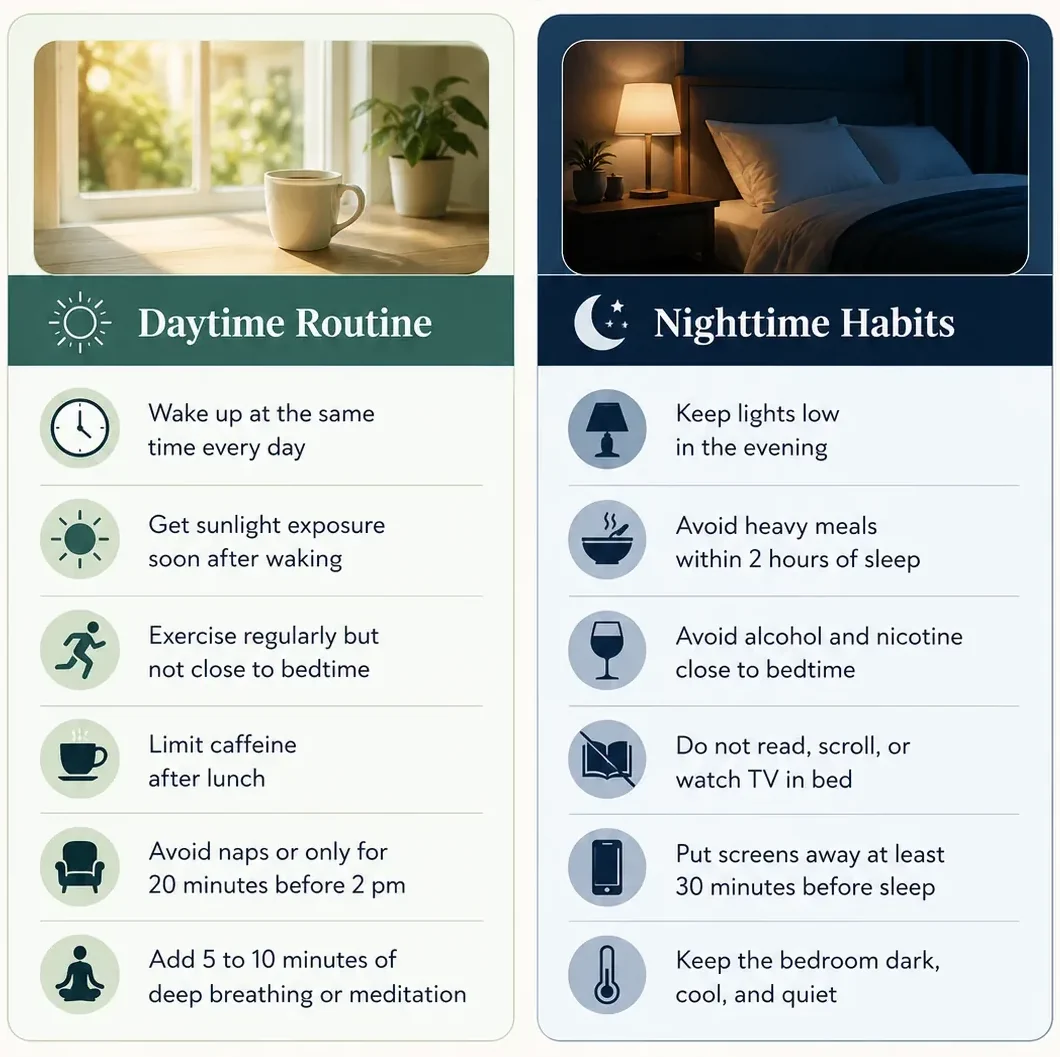
The infographic below shows the most useful routines and habits to focus on.
Daytime Routine
Your daytime routine helps set the stage for better sleep at night. Morning light, regular movement, and a consistent wake time all support a healthier sleep schedule.
-
Wake up at the same time every day, even on weekends, so your body learns a steady rhythm.
-
Get sunlight exposure soon after waking to help regulate your circadian rhythm and improve alertness during the day.
-
Exercise regularly, but avoid intense activity too close to bedtime if it leaves you feeling energized at night.
-
Limit caffeine after lunch so it does not linger in your system and interfere with falling asleep later.
-
Avoid naps, or keep them to 20 minutes or less before 2 p.m., so you preserve sleep pressure for nighttime.
-
Add 5 to 10 minutes of deep breathing or meditation to help reduce stress and support a calmer evening transition.
Nighttime Habits
Your nighttime habits should signal to your body that it is time to slow down. A quieter, darker, more predictable evening routine can make sleep easier to start and easier to maintain.
-
Keep lights low in the evening so your brain gets a clear signal that bedtime is approaching.
-
Avoid heavy meals within 2 hours of sleep, since digestion can make it harder to relax and fall asleep.
-
Avoid alcohol and nicotine close to bedtime because both can interfere with sleep quality later in the night.
-
Do not read, scroll, or watch TV in bed so your brain keeps the bed linked with sleep, not wakefulness.
-
Put screens away at least 30 minutes before sleep to reduce stimulation and limit light exposure.
-
Keep the bedroom dark, cool, and quiet so your sleep environment supports deeper, less interrupted rest.
Healthy daytime and nighttime habits are both important for improving sleep quality. Together, they help support your circadian rhythm, reduce sleep disruption, and make it easier to fall asleep at night.
Why Can’t I Sleep at Night?
People often ask, why can’t I sleep at night? and the answer is usually a mix of habits, stress, and timing. Late caffeine, alcohol, irregular schedules, stress, anxiety, and too much screen time can all make sleep harder to start or maintain.
In some cases, trouble sleeping at night is tied to insomnia, a mood disorder, pain, medication effects, or substance use. If sleep problems are happening most nights for weeks at a time, it is worth getting a medical evaluation rather than just trying to push through it.
Chronic insomnia is treatable, and there are effective options beyond medication, including cognitive behavioral therapy for insomnia.
Commonly Asked Questions
How many hours of sleep do I actually need?
Most adults need at least seven hours per night. The American Academy of Sleep Medicine and the CDC both set this as the minimum for supporting physical and mental health. Some people function best with eight or nine hours, and individual needs can vary.
Is it okay to nap during the day?
Short naps of 20 minutes or less can be refreshing and are generally fine for healthy sleepers. Longer naps, or naps late in the afternoon, can make it harder to fall asleep at night. If you are struggling with nighttime sleep, it is usually best to skip naps entirely.
When should I talk to a doctor about sleep problems?
If poor sleep persists for more than a few weeks despite trying the strategies above, or if it is affecting your mood, energy, or daily functioning, a conversation with a healthcare provider is a good next step. Chronic insomnia is a treatable condition, and effective options exist beyond medication.
How Solstice Health & Wellness Can Help
If sleep problems last more than a few weeks, affect your mood or energy, or make daily life harder, it helps to reach out. Trouble sleeping can signal insomnia, stress overload, depression, anxiety, sleep apnea, or another treatable issue.
At Solstice Health & Wellness in Sarasota, the care team looks at sleep through lifestyle medicine and wellness care that considers habits, nutrition, movement, and stress together. When sleep overlaps with mood concerns, integrated primary care brings medical and mental health support into one place.
Because sleep struggles often go hand in hand with substance use, addiction treatment and recovery care also includes support for stabilizing rest and overall health. Telehealth visits are available across Florida, so distance does not have to keep you from help.
A Better Night Starts in the Day
You do not need a perfect routine to improve sleep quality. Start with one or two changes, keep them consistent, and give your body time to adjust. A fixed wake time, a calmer evening, and less alcohol at night can move sleep in the right direction.
Improving sleep is often less about trying harder and more about creating the right conditions for your body to do what it already knows how to do.
Medically Reviewed By
Frank Melo, MD
Board Certified Addiction Medicine and Family Medicine
Medical Director, Solstice Health & Wellness
Last Updated: June 2026
References
- Watson NF, Badr MS, Belenky G, et al. Joint consensus statement of the American Academy of Sleep Medicine and Sleep Research Society on the recommended amount of sleep for a healthy adult: methodology and discussion. Sleep. 2015.
- Centers for Disease Control and Prevention. Sleep and sleep disorders: data and statistics. Reviewed May 2, 2024.
- Chaput JP, Dutil C, Featherstone R, et al. Sleep duration and health in adults: an overview of systematic reviews. Appl Physiol Nutr Metab. 2020.
- Morin CM, Buysse DJ. Management of insomnia. N Engl J Med. 2024.
- Qaseem A, Kansagara D, Forciea MA, Cooke M, Denberg TD, et al. Management of chronic insomnia disorder in adults: a clinical practice guideline from the American College of Physicians. Ann Intern Med. 2016.
- Xie Y, Liu S, Chen XJ, Yu HH, Yang Y, Liu S. Effects of exercise on sleep quality and insomnia in adults: a systematic review and meta-analysis of randomized controlled trials. Front Psychiatry. 2021.
- Gardiner C, Weakley J, Burke LM, et al. The effect of alcohol on subsequent sleep in healthy adults: a systematic review and meta-analysis. Sleep Med Rev. 2025.
- Gardiner C, Weakley J, Burke LM, et al. The effect of caffeine on subsequent sleep: a systematic review and meta-analysis. Sleep Med Rev. 2023.
- Meyer N, Harvey AG, Lockley SW, Dijk DJ. Circadian rhythms and disorders of the timing of sleep. Lancet. 2022.
Medical Disclaimer: The information provided on this page is for educational purposes only and is not a substitute for professional medical advice, diagnosis, or treatment. Always seek the advice of a qualified healthcare provider with any questions you may have regarding a medical condition.