
Naltrexone and Vivitrol Treatment

Understanding Naltrexone and Vivitrol Treatment
Naltrexone is an FDA-approved medication used to treat alcohol use disorder and opioid use disorder. Specifically, it works by blocking opioid receptors in the brain. As a result, this reduces cravings, lowers the rewarding effects of substances, and supports long-term recovery.
Unlike opioid medications, naltrexone does not produce a high and does not lead to dependence.
In addition, clinicians also use naltrexone in other areas of medicine. For example, it plays a role in weight management, chronic pain, inflammatory conditions, and more. Furthermore, research continues to expand its clinical use.
Whether the goal is to stop drinking, prevent opioid relapse, or explore other treatment options, naltrexone may be a strong fit. At Solstice Health & Wellness in Sarasota, Florida, treatment plans are built around you, combining naltrexone and Vivitrol with comprehensive outpatient care.
Learn more about Solstice Health & Wellness outpatient addiction treatment & recovery program.
Help is available now. Call or connect with us to schedule a private evaluation.
What is Naltrexone?
Naltrexone is a medication that blocks opioid receptors in the brain and comes in two forms:
- Oral naltrexone (brand name: Revia), a 50 mg tablet taken once daily
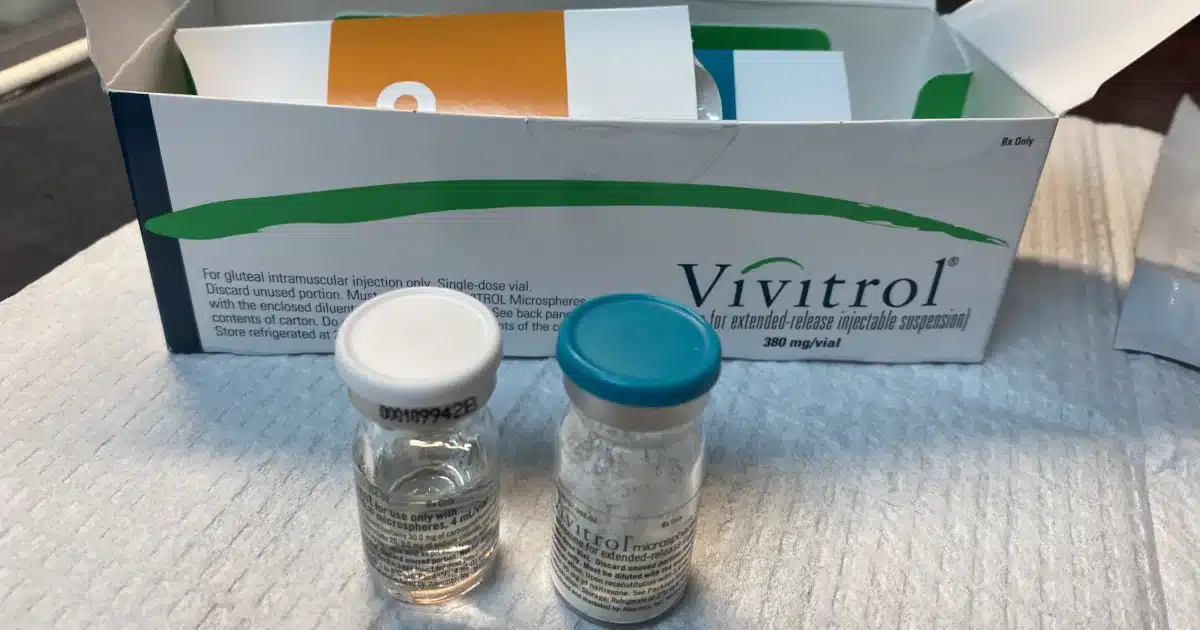
- Vivitrol, a 380 mg long-acting shot given once every 4 weeks in a clinical setting
Importantly, naltrexone is not a controlled substance. Because of this, it has no potential for misuse and providers can prescribe it without special DEA registration or a waiver. The FDA approved the oral form for opioid dependence in 1984 and then for alcohol dependence in 1994. Later, Vivitrol received FDA approval for alcohol dependence in 2006 and for opioid dependence in 2010.
How Naltrexone Works
The brain has a built-in reward system. When a person drinks alcohol or uses opioids, the brain releases natural chemicals called endorphins. In turn, these endorphins trigger a surge of dopamine in the brain’s reward center, which creates feelings of pleasure. Over time, the brain learns to crave that reward, and consequently, this drives continued use.
Naltrexone works by blocking opioid receptors before endorphins can activate them. As a result, opioids cannot produce a high, alcohol loses its rewarding buzz, and cravings fade over time. Importantly, naltrexone does not cause sedation, euphoria, or withdrawal when stopped. Instead, it simply removes the reward that substances provide.
At low doses (1.5 to 4.5 mg), however, naltrexone works differently. It briefly blocks receptors for just a few hours. In response, the body produces more endorphins and builds additional opioid receptors. This rebound effect is what makes low dose naltrexone useful for pain, inflammation, and immune conditions.
Does Naltrexone Affect Enjoyment in Other Activities?
Many people wonder whether blocking the reward system also takes away enjoyment from food, exercise, sex, music, or time with loved ones. This is one of the most common concerns, and fortunately, the research is reassuring.
For instance, a study followed 74 patients on Vivitrol for an average of 3.5 years. These patients rated the pleasure from alcohol and gambling much lower than before treatment. However, they continued to rate enjoyment of exercise, sex, music, eating good food, reading, and spending time with friends at normal or near normal levels. Moreover, this pattern held regardless of dose or how long they took the medication.
In other words, naltrexone appears to target substance-related reward more than natural enjoyment.
What the Research Shows About Specific Activities
- Food: Naltrexone modestly reduces the pleasantness of sweet and fatty foods. In fact, this is part of why the naltrexone and bupropion combination (Contrave) helps with weight management.
- Social connection: One study found naltrexone slightly reduced feelings of closeness toward family and friends, which suggests endorphins play a role in social bonding.
- Music: A controlled study found naltrexone slightly dulled both positive and negative emotional responses to music, confirming that music engages the same opioid pathways as other rewards.
- Exercise: In the long-term study above, exercise pleasure stayed significantly higher than alcohol pleasure throughout treatment, suggesting exercise reward stays largely intact.
- Mood and emotional blunting: Some patients notice mild emotional flattening early in treatment. However, a controlled trial of 306 patients found that depression, anxiety, and anhedonia (loss of pleasure) actually improved within 1 to 2 months of starting naltrexone. Importantly, there was no difference in anhedonia between the naltrexone and placebo groups.
The bottom line: Most people on naltrexone continue to enjoy everyday activities. Some may notice mild blunting of emotional highs and lows, especially in the first few weeks. These effects tend to improve as the brain adjusts. If persistent loss of pleasure occurs, it is important to discuss this with the treatment team, as it may affect treatment engagement.
What Does Naltrexone and Vivitrol Treat?
Naltrexone is used across a range of medical conditions. Some uses are FDA-approved. Others are supported by clinical evidence or ongoing research.
FDA Approved Indications
Opioid Use Disorder (OUD)
Naltrexone prevents relapse after opioid detox by blocking the “high” from opioids. In particular, Vivitrol works for a full month with one shot, so there is no need to take it daily.
Once started, injectable naltrexone shows results similar to buprenorphine. The key difference is that patients must be opioid free for 7 to 10 days before the first dose. Although that waiting period can make starting more difficult, once that step is complete, both medications show similar outcomes.
Learn more about buprenorphine treatment for opioid use disorder.
Alcohol Use Disorder (AUD)
Naltrexone lowers cravings and also weakens the rewarding effects of drinking. Unlike other options, it can start while a person is still drinking. Both oral naltrexone and Vivitrol carry FDA approval for this purpose.
Evidence-Based Clinical Uses (Off Label)
These uses have meaningful clinical evidence. “Off-label” means a doctor prescribes a medication for a condition it was not originally approved for, based on strong research showing it can help.
Weight Management
Naltrexone combined with bupropion (sold as Contrave) carries FDA approval for long term weight control in adults with a BMI of 30 or higher, or 27 or higher with a weight-related health condition.
Methamphetamine Use Disorder
Research supports combining injectable naltrexone with oral bupropion to reduce methamphetamine use. To date, this combination has the strongest evidence for medication treatment in methamphetamine use disorder.
Gambling Disorder
Large reviews of all available research confirm that naltrexone has the most evidence among all medications studied for gambling disorder. As a result, it is one of the most commonly used options.
Chronic Pain (Low Dose Naltrexone-LDN)
At very low doses (1.5 to 4.5 mg daily), naltrexone works differently. Specifically, it briefly blocks opioid receptors, which prompts the body to make more natural pain-relieving chemicals and calm nervous system inflammation. Studies support its use for fibromyalgia, complex regional pain syndrome, diabetic nerve pain, and cancer-related pain. However, LDN requires a compounding pharmacy because no commercial low dose form exists yet.
Autoimmune and Inflammatory Conditions
LDN may calm inflammation and help balance the immune system. For example, it has been studied in conditions such as Crohn’s disease and multiple sclerosis.
Skin Conditions
Both standard dose naltrexone (25 to 50 mg daily) and LDN have shown benefits for chronic itching and inflammatory skin conditions such as eczema.
Behavioral Conditions
Early research has explored naltrexone for hair-pulling disorder, kleptomania, and binge eating disorder. However, evidence is still in early stages.
Research Stage Uses (Not Standard Practice)
These areas show early promise, but the evidence is not yet strong enough for routine use.
Long COVID
Early studies suggest LDN may reduce symptoms and improve daily function. As a result, controlled trials are now underway.
Chronic Fatigue Syndrome
Lab studies suggest LDN may help restore immune cell function. Consequently, clinical trials are ongoing to confirm these findings.
Cancer
Animal studies suggest LDN may slow tumor growth. However, human evidence remains very limited. LDN should not serve as a cancer treatment outside of clinical trials.
How Effective is Naltrexone?
Naltrexone does not work for everyone. However, research shows it meaningfully improves the odds of recovery, especially when combined with counseling and support.
Alcohol Use Disorder (AUD)
Out of every 11 people who take oral naltrexone, one additional person avoids returning to heavy drinking compared to those who take no medication. This means the medication gives roughly a 1 in 11 extra chance of staying away from heavy drinking beyond what willpower and other support alone would achieve.
Additionally, out of every 18 people treated, one additional person stops drinking entirely compared to placebo. Since complete abstinence is a higher bar to clear, that smaller number is expected.
The monthly Vivitrol injection also helps. Specifically, patients on Vivitrol drank on about 5 fewer days each month compared to placebo. Over a year, that adds up to roughly 60 fewer drinking days.
Opioid Use Disorder (OUD)
Once started, injectable naltrexone (Vivitrol) works about as well as buprenorphine (Suboxone) at preventing relapse. The key difference is that patients must be opioid free for 7 to 10 days before the first dose, which can make starting more difficult. However, once that step is complete, both medications show similar outcomes.
Methamphetamine Use Disorder
A major clinical trial called ADAPT 2 tested injectable naltrexone plus oral bupropion for methamphetamine use. The results showed that about 1 in 9 patients who received the medication combination had a positive response, compared to only 1 in 40 on placebo.
In practical terms, that means for every 9 people treated, one additional person benefited beyond what would happen without treatment. Furthermore, benefits also continued through 12 weeks.
Gambling Disorder
A 2022 Cochrane review and a 2025 network analysis both confirmed that naltrexone has the most supporting evidence among all medications studied for gambling disorder.
Chronic Pain (Low Dose Naltrexone-LDN)
A 2023 review of 47 studies found that LDN improved pain, daily function, and sleep across multiple chronic pain conditions.
Autoimmune and Inflammatory Conditions
In one Crohn’s disease study, 89% of patients improved and about 1 in 3 reached remission, compared to fewer than 1 in 10 on placebo. Similarly, studies also support safety and symptom improvement in multiple sclerosis.
Skin Conditions
Low-dose naltrexone led to strong improvements in chronic itching from eczema. In some cases, itching resolved fully within 2 weeks. Furthermore, a 2025 review confirmed LDN works across multiple inflammatory skin conditions.
Naltrexone Versus Other Treatments for AUD
Three FDA-approved medications treat alcohol use disorder. Each works differently. The best choice depends on individual needs, goals, and access to care.
For OUD, naltrexone joins buprenorphine and methadone as FDA-approved options. Buprenorphine and methadone are both first-line treatments. Unlike those medications, naltrexone is not an opioid and therefore has no misuse potential.
Vivitrol is preferred for people who have already stopped opioid use. However, Vivitrol is difficult to initiate because it requires 7–10 days without opioids before the first dose.
Why Vivitrol Is Preferred Over Oral Naltrexone for Opioid Use Disorder
For opioid use disorder, Vivitrol (injectable naltrexone) is strongly preferred over oral naltrexone. This preference exists for several important reasons related to adherence, safety, and effectiveness.
Better Treatment Retention
The biggest challenge with oral naltrexone is that patients often stop taking it. In fact, a randomized trial found that 57% of patients stayed in treatment for 6 months on Vivitrol compared to only 28% on oral naltrexone. Similarly, a 2025 meta-analysis confirmed that patients on Vivitrol were nearly twice as likely to remain in treatment at both 3 months and 6 months compared to those on daily pills.
Because of this, the VA/DoD and CDC guidelines now recommend injectable naltrexone over oral naltrexone for OUD.
Receptor Upregulation and Overdose Risk
When naltrexone blocks opioid receptors over time, the brain responds by building more opioid receptors and making them more sensitive. This process is called receptor upregulation and hypersensitivity. Specifically, laboratory studies confirm that chronic naltrexone treatment increases the number of opioid receptors by 60 to 122% and makes them 1.8 to 2.0 times more sensitive to opioids.
As a result, this creates a serious safety concern. If a patient stops taking naltrexone or misses doses, their opioid tolerance drops dramatically. Consequently, using the same amount of opioids they used before treatment can now cause a life-threatening overdose.
In fact, the FDA labels for both oral naltrexone and Vivitrol carry warnings that fatal overdoses have been reported in patients who returned to opioid use after stopping treatment, missing a dose, or at the end of a dosing interval.
Why This Matters More for Oral Naltrexone
With oral naltrexone, missing even one or two daily doses creates a window where the blockade weakens but receptor hypersensitivity remains. During this time, patients face extremely high overdose risk if they use opioids.
In contrast, Vivitrol provides continuous blockade for 4 weeks, which eliminates the daily decision to take medication and therefore reduces the chance of gaps in coverage.
Postmarketing Safety Data
A 12-year analysis of nearly 500,000 patients treated with Vivitrol found overdose reporting rates of less than 10 per 10,000 patients. Importantly, overdose rates were similar whether the event occurred during treatment (within 28 days of the last shot), between 29 and 56 days after the last shot, or more than 56 days after stopping. This suggests that when patients receive consistent monthly injections, the risk stays relatively low and predictable.
Clinical Bottom Line
For these reasons, current guidelines state that oral naltrexone should not be used except under very limited circumstances for OUD. Instead, Vivitrol is the recommended form because it ensures consistent medication delivery, eliminates daily adherence challenges, and reduces the risk of dangerous gaps in opioid blockade that could lead to fatal overdose.
Who is a Good Candidate and Who Should Not Take It?
Naltrexone may fit people who want to cut back or stop drinking, have finished opioid detox, prefer a non opioid medication, or want a once monthly shot.
On the other hand, do not take naltrexone if currently using opioids (because it will cause severe withdrawal), if living with acute hepatitis or liver failure, if allergic to naltrexone, or if not opioid free for at least 7 to 10 days.
Naltrexone Side Effects, Risks, and Safety
Common Side Effects
- Nausea (up to 29%)
- Headache
- Dizziness
- Fatigue
- Injection site reaction
- Decreased appetite
- Trouble sleeping
Fortunately, most of these resolve within 1 to 2 weeks. Also, taking oral naltrexone with food helps with nausea.
Risks
Opioid overdose risk after stopping (because tolerance drops), triggered withdrawal if opioids are still in the body, rare liver injury, mood changes including depression, and rare tissue damage at shot sites.
Stay opioid free 7 to 10 days before starting (or up to 2 weeks from methadone or oral buprenorphine). In addition, carry a card alerting providers that opioid pain medications will not work. Avoid taking with acute hepatitis or liver failure. Also, use caution with kidney problems.
Critical Safety Warning
Patients who stop naltrexone or miss doses face extremely high risk of fatal overdose if they return to opioid use. This happens because opioid tolerance drops dramatically while the brain becomes hypersensitive to opioids. Therefore, using previously tolerated doses can cause respiratory arrest, circulatory collapse, and death.
Family members and close contacts should know about this risk. In addition, all patients should receive naloxone (Narcan) for emergency overdose reversal.
Safety Notes
If you are pregnant or planning pregnancy, naltrexone has limited human safety data. Major medical organizations including ACOG, ASAM, and SMFM advise that starting naltrexone during pregnancy is generally not recommended; however, women who become pregnant while stable on it may consider continuing after a careful discussion about relapse risk versus the limited safety data.
Extended‑release injections can make pain control during delivery more difficult and require advance planning.
During breastfeeding, small amounts of naltrexone pass into breast milk, but available data suggest infant exposure is low. Because long‑term data are limited, shared decision‑making and routine infant monitoring are recommended.
Dosing and How it is Given
Oral naltrexone starts at 25 mg on day one, then increases to 50 mg daily. For supervised settings, alternative schedules include 100 mg on Monday and Wednesday with 150 mg on Friday. Vivitrol is 380 mg given as a deep muscle shot every 4 weeks, switching sides each month. A provider must give the Vivitrol shot in a clinical setting.
What to Expect After Starting Naltrexone
- First week: Some nausea or fatigue may occur. At the same time, cravings often start to drop.
- First month: Most people notice a real drop in urges. Specifically, Vivitrol reaches steady levels by the end of the first cycle.
- Ongoing: As stability improves, visit frequency decreases.
Treatment Duration
Most guidelines suggest 6 to 12 months minimum, and many people benefit from longer use. Naltrexone can stop without tapering. However, stopping raises the risk of relapse and overdose.
For Clinicians: Key Prescribing Considerations
Naltrexone is not a controlled substance. Accordingly, no X waiver, REMS, or special registration is required.
Pharmacokinetics
Oral half life is 5 to 12 hours; the active metabolite 6 β naltrexol has a longer half life. Vivitrol half life is 5 to 10 days with measurable levels beyond one month. Notably, it is not metabolized by CYP450; instead, it is conjugated to glucuronides and eliminated renally.
Interactions
Minimal CYP450 interactions. However, opioid agonists cause precipitated withdrawal. Therefore, counsel patients that opioid analgesics, antidiarrheals, and antitussives will be ineffective.
Monitoring
Baseline LFTs are recommended, although they should not delay initiation per AAAP/SAMHSA. Quarterly LFTs are generally sufficient. Discontinue if transaminases exceed 10× ULN with symptoms. Also, confirm opioid free status with urine drug screen. In addition, consider baseline beta hCG.
Special Populations
No dose adjustment is needed for mild to moderate hepatic impairment. However, use caution in moderate to severe renal impairment.
Naltrexone (oral and extended-release injectable Vivitrol) has limited but evolving safety data in pregnancy. Animal studies have shown early fetal loss at high exposures, although no consistent pattern of congenital malformations has been identified, and available human data remain limited to small cohort studies and case series.
Current guidance from the American Society of Addiction Medicine (ASAM), the American College of Obstetricians and Gynecologists (ACOG), and the Society for Maternal-Fetal Medicine (SMFM) suggests that initiating naltrexone during pregnancy is not recommended. However, continuation may be considered in patients who become pregnant while stable on naltrexone.
Furthermore, although naltrexone and its metabolite are present in low levels in human milk, the Academy of Breastfeeding Medicine cites a case study of a patient on oral naltrexone 50 mg daily with normal infant development. Nevertheless, individualized risk-benefit discussion and routine infant monitoring are recommended.
Precipitated Withdrawal Prevention
Maintain a minimum 7 to 10 day opioid free interval; extend up to 2 weeks from buprenorphine or methadone. Before full dosing, consider a naloxone challenge or low dose oral test.
Naloxone
Co-prescribe for all OUD patients. In some cases, higher naloxone doses may be needed with residual blockade.
Pain management
First, use regional analgesia and non opioid analgesics. If opioids are needed, higher doses may be required along with close respiratory monitoring.
Endorphin Effects Counseling
Long-term data show naltrexone preferentially reduces substance-related reward while largely preserving enjoyment from exercise, food, sex, and social activities. Some patients may report mild emotional blunting early in treatment. Controlled data show anhedonia improves within 1 to 2 months and does not differ from placebo. However, persistent anhedonia warrants clinical attention as it may predict treatment dropout.
Receptor Upregulation and Overdose Risk
Chronic naltrexone treatment upregulates mu opioid receptors by 60 to 122% and increases receptor sensitivity 1.8 to 2.0 fold. Consequently, patients who discontinue treatment, miss doses, or reach the end of a dosing interval face dramatically reduced opioid tolerance and heightened overdose risk.
Fatal overdoses have been reported in these scenarios. Therefore, counsel all patients and their families about this risk. Prescribe naloxone for emergency reversal. For OUD, strongly prefer Vivitrol over oral naltrexone to ensure continuous blockade and minimize gaps in coverage. Current guidelines recommend injectable naltrexone over oral naltrexone for OUD.
Referrals
New appointments are typically available within one week. Call us or connect with us through our contact form.
Is Naltrexone and Vivitrol Right for Me?
The right treatment depends on personal goals, medical history, and readiness for change. For AUD, naltrexone can start while still drinking.
For OUD, however, a period of abstinence is needed first. Above all, substance use disorder is a treatable medical condition.
If you or someone you know is in crisis, call or text 988 to reach the Suicide and Crisis Lifeline at any time.
Naltrexone and Vivitrol Treatment at Solstice Health Wellness
Each patient gets a tailored plan combining medication, behavioral health support, and ongoing medical care:
- Medication management and on-site Vivitrol shots
- Counseling and behavioral support
- Treatment for co-occurring medical and mental health conditions
- Primary care, preventive care, lab work, and wellness in one setting
- Telehealth throughout Florida
- Stigma-free clinical environment focused on long-term recovery
Cost and Insurance: The practice runs on a direct primary care (DPC) model. An affordable monthly feep covers primary care, mental health, addiction medicine, preventive care, and telehealth. In addition, insurance can cover labs, screenings, imaging, and prescriptions. DPC is not health insurance and does not replace health insurance.
Getting Started
- Schedule a private evaluation
- Complete a full health history and physical exam
- Get baseline lab testing
- Begin oral naltrexone per the tailored plan
- For Vivitrol, the team coordinates with insurance to arrange delivery. During this time, patients take oral naltrexone.
- Once the injectable arrives, it is administered in the office.
Bring: valid ID, insurance card, medication list, and medical records if available.
Frequently Asked Questions
1. Is naltrexone addictive?
No. It is not a controlled substance and therefore does not cause physical need.
2. Can I work or drive?
Most people can. However, avoid driving until you know how it affects you.
3. What if I relapse?
Contact the treatment team right away. Importantly, trying to overcome the blockade with large opioid doses is extremely dangerous and can cause fatal overdose.
4. Does it interact with antidepressants?
No major interactions exist with most antidepressants. Even so, the treatment team will review all medications for safety.
5. What if I miss a dose?
For oral naltrexone, take it when you remember. Do not double up. For Vivitrol, schedule a missed shot as soon as possible. Missing doses creates serious overdose risk if you use opioids.
6. Can I stop suddenly?
Yes, naltrexone does not cause withdrawal. However, stopping dramatically increases relapse and overdose risk because your opioid tolerance drops. Always talk with the treatment team first.
7. Safe during pregnancy?
Data are limited. As a result, discuss risks and benefits with the provider.
8. Do I need to stop drinking first?
No, for AUD. However, for OUD, a 7 to 10 day opioid free period is needed.
9. Will naltrexone take away my enjoyment of everyday activities?
Research shows naltrexone targets substance-related reward more than natural pleasures. Most people continue to enjoy food, exercise, sex, music, and time with loved ones. Some mild emotional blunting may occur early on but typically improves within 1 to 2 months.
10. Why is Vivitrol better than oral naltrexone for opioid use disorder?
Vivitrol provides continuous medication for 4 weeks, which eliminates daily decisions and gaps in coverage. In contrast, missing even one or two oral doses creates dangerous windows where overdose risk spikes. Studies show patients stay in treatment twice as long on Vivitrol compared to oral naltrexone.
Medically Reviewed By
Frank Melo, MD
Board Certified Addiction Medicine and Family Medicine
Medical Director, Solstice Health & Wellness
Last Updated: April 2026
References
- Food and Drug Administration. Naltrexone Hydrochloride – FDA Prescribing Information. DailyMed. Updated 2024.
- Food and Drug Administration. Vivitrol (Naltrexone for Extended-Release Injectable Suspension) – FDA Prescribing Information. DailyMed. Updated 2025.
- McPheeters M, O’Connor EA, Riley S, et al. Pharmacotherapy for Alcohol Use Disorder: A Systematic Review and Meta-Analysis. JAMA. 2023.
- Haber PS. Identification and Treatment of Alcohol Use Disorder. N Engl J Med. 2025.
- Lee JD, Nunes EV, Novo P, et al. Comparative Effectiveness of Extended-Release Naltrexone Versus Buprenorphine-Naloxone for Opioid Relapse Prevention (X: BOT). Lancet. 2018.
- Tanum L, Solli KK, Latif ZE, et al. Effectiveness of Injectable Extended-Release Naltrexone vs Daily Buprenorphine-Naloxone for Opioid Dependence. JAMA Psychiatry. 2017.
- Lodi S, Yan S, Bovell-Ammon B, et al. Comparative Effectiveness of Extended-Release Naltrexone Versus Buprenorphine-Naloxone on Treatment Interruption. Addiction. 2025.
- Food and Drug Administration. Contrave (Naltrexone/Bupropion Extended-Release) – FDA Prescribing Information. DailyMed. Updated 2025.
- Trivedi MH, Walker R, Ling W, et al. Bupropion and Naltrexone in Methamphetamine Use Disorder. N Engl J Med. 2021.
- Li MJ, Chau B, Belin T, et al. Extended Observation of Reduced Methamphetamine Use With Combined Naltrexone Plus Bupropion in the ADAPT-2 Trial. Addiction. 2024.
- Dowling N, Merkouris S, Lubman D, et al. Pharmacological Interventions for the Treatment of Disordered and Problem Gambling. Cochrane Database Systematic Reviews. 2022.
- Ioannidis K, Del Giovane C, Tzagarakis C, et al. Pharmacological Management of Gambling Disorder: A Systematic Review and Network Meta-Analysis. Comprehensive Psychiatry. 2025.
- Rupp A, Young E, Chadwick AL. Low-Dose Naltrexone’s Utility for Non-Cancer Centralized Pain Conditions: A Scoping Review. Pain Medicine. 2023.
- Patten DK, Schultz BG, Berlau DJ. The Safety and Efficacy of Low-Dose Naltrexone in the Management of Chronic Pain and Inflammation in Multiple Sclerosis, Fibromyalgia, Crohn’s Disease, and Other Chronic Pain Disorders. Pharmacotherapy. 2018.
- Kim PS, Fishman MA. Low-Dose Naltrexone for Chronic Pain: Update and Systemic Review. Curr Pain Headache Rep. 2020.
- Smith JP, Bingaman SI, Ruggiero F, et al. Therapy With the Opioid Antagonist Naltrexone Promotes Mucosal Healing in Active Crohn’s Disease: A Randomized Placebo-Controlled Trial. Dig Dis Sci. 2011.
- Smith JP, Stock H, Bingaman S, et al. Low-Dose Naltrexone Therapy Improves Active Crohn’s Disease. Am J Gastroenterol. 2007.
- Lie MRKL, van der Giessen J, Fuhler GM, et al. Low Dose Naltrexone for Induction of Remission in Inflammatory Bowel Disease Patients. J Transl Med. 2018.
- Ekelem C, Juhasz M, Khera P, Mesinkovska NA. Utility of Naltrexone Treatment for Chronic Inflammatory Dermatologic Conditions: A Systematic Review. JAMA Dermatol. 2019.
- Zhou MH, Elston DM, Morrison BW, Lipner SR. Low-Dose Naltrexone for Treatment of Dermatologic Conditions: A Clinical Review. J Am Acad Dermatol. 2025.
- Sikora M, Rakowska A, Olszewska M, Rudnicka L. The Use of Naltrexone in Dermatology: Current Evidence and Future Directions. Curr Drug Targets. 2019.
- Lee B, Elston DM. The Uses of Naltrexone in Dermatologic Conditions. J Am Acad Dermatol. 2019.
Medical Disclaimer: The information provided on this page is for educational purposes only and is not a substitute for professional medical advice, diagnosis, or treatment. Always seek the advice of a qualified healthcare provider with any questions you may have regarding a medical condition.