
Sublocade Treatment for Opioid Addiction
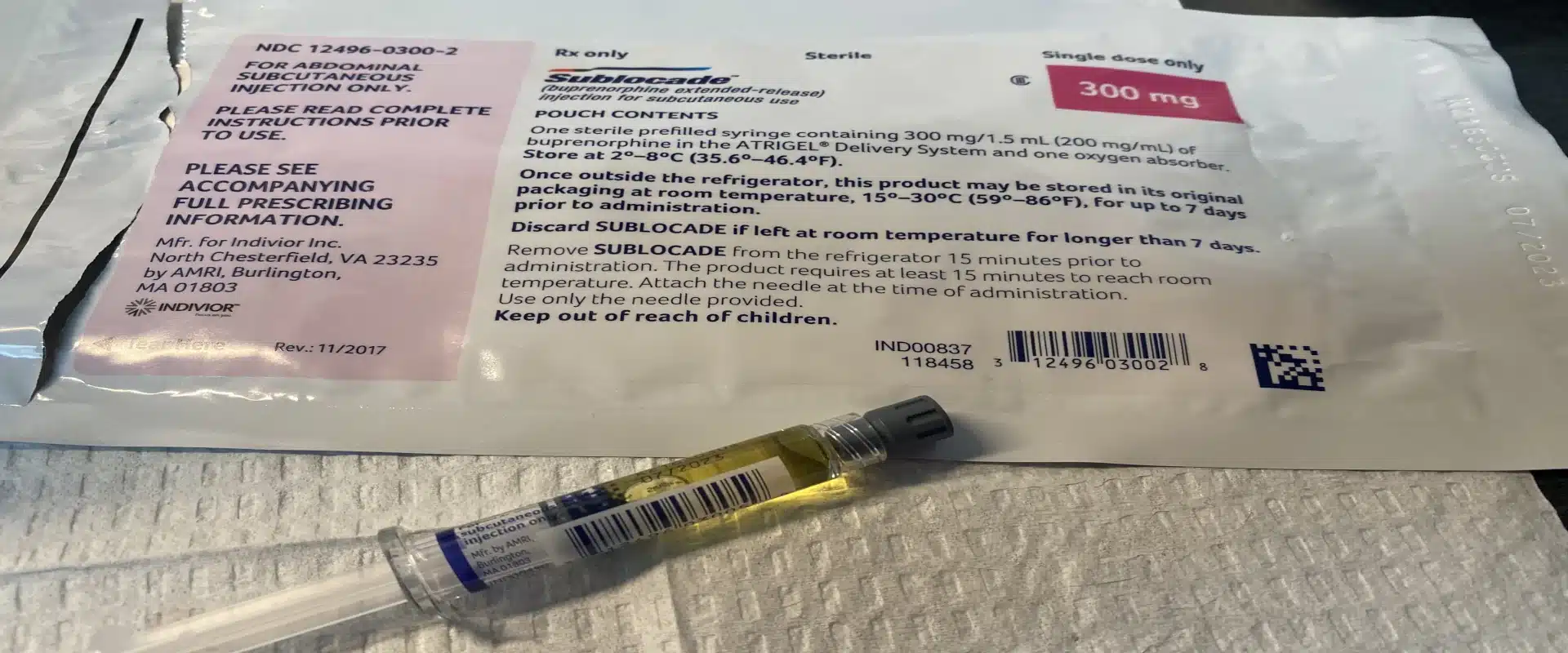
Understanding Sublocade Treatment
Opioid use disorder is a chronic medical condition that changes how the brain responds to opioids over time. Because the brain adapts to their presence, it is very hard to stop without medical support. Fortunately, effective treatment exists, and it works.
Sublocade is an FDA-approved, once-monthly buprenorphine injection that treats moderate to severe opioid use disorder. Instead of taking a daily film or tablet, you receive one injection at the office each month.
OUD affected an estimated 3.7 percent of U.S. adults, roughly 9.4 million people, in 2022. It caused more than 53,000 deaths in 2024. Despite strong evidence that medications for opioid use disorder greatly reduce the risk of overdose and death, only about 25 percent of people with OUD currently receive these medications.
At Solstice Health Wellness in Sarasota, Florida, Sublocade is part of a comprehensive treatment program. Our team combines medication management, behavioral support, and coordination of care to build a treatment plan around each patient’s needs.
What is Sublocade?
Sublocade (buprenorphine extended-release injection) was the first once-monthly buprenorphine injection the FDA approved, receiving approval in 2017. It treats moderate to severe opioid use disorder in adults and falls under Schedule III controlled substance classification.
Buprenorphine is a partial opioid agonist. In other words, it activates the same brain receptors as opioids, but with a built-in ceiling effect. That ceiling limits the high and the breathing problems that full opioid agonists cause. As a result, buprenorphine cuts cravings and withdrawal symptoms while carrying a lower risk of misuse.
Learn more about how buprenorphine works →
How Sublocade Works
After the injection, Sublocade forms a small solid depot under the skin. This depot slowly releases buprenorphine over the course of a month. Because of this, it removes the need for daily medication and avoids the ups and downs that daily sublingual forms commonly produce. Specifically, it provides three key effects:
- Steady activation of opioid receptors at a level that cuts cravings and prevents withdrawal
- A ceiling effect that limits the high and breathing risks tied to full opioid agonists like methadone. fentanyl or heroin
- Opioid blockade that reduces the rewarding effects of illicit opioid use
At its highest dose of 300 mg monthly, Sublocade reaches buprenorphine blood levels similar to or higher than 24 mg daily of under-the-tongue buprenorphine. However, it may take 8 to 16 weeks to reach steady levels. Additionally, blood level swings are also lower with the shot, which contributes to more stable symptom control throughout the month.
Myth: “Sublocade stops working before the end of the month.”
Fact: Sublocade maintains steady buprenorphine levels throughout the month with smaller blood level swings than daily sublingual forms. Some patients need supplemental support in the first 1 to 3 months while levels build to steady state.
Who is a Good Candidate for Sublocade?
Sublocade may be right for people who:
- Are currently stable on sublingual buprenorphine (at least one dose is required before starting)
- Want to stop taking daily medication
- Have difficulty remembering to take medication every day
- Prefer monthly clinic visits over daily dosing
- Want steady medication levels without the ups and downs of daily dosing
Providers can also move patients from sublingual buprenorphine or start them on Sublocade using a rapid start protocol.
Who Should Not Take Sublocade?
Certain individuals should avoid Sublocade. These include people with severe liver disease, people with a known allergy to buprenorphine or the injection ingredients, and people currently intoxicated on opioids, because this can trigger sudden, severe withdrawal. Furthermore, people with severe respiratory conditions may need to avoid this medication in some cases.
How Effective is Sublocade?
The evidence behind Sublocade is strong. In the key phase 3 trial, 28 to 29 percent of patients receiving Sublocade achieved treatment success (80 percent or more opioid-free weeks), compared with only 2 percent on placebo. Over 60 percent of Sublocade patients completed the 24-week study, nearly double the placebo group’s 34 percent.
Longer-term data are equally encouraging. In a 12-month open-label study, 61.5 to 75.8 percent of participants stayed opioid-free, and side effects decreased over time. When compared head-to-head with daily sublingual buprenorphine-naloxone, the injectable form produced significantly more opioid-negative urine samples.
Studies also show that starting Sublocade sooner, rather than waiting days on daily medication, helps more patients stay in treatment, particularly those using fentanyl.
How Does Sublocade Compare With Other Treatments?
Several FDA-approved medications treat opioid use disorder. The right choice depends on individual needs, treatment history, and clinical goals. Therefore, providers and patients should make this decision together.
Sublocade vs. Suboxone
Both contain buprenorphine, but patients take them differently. Suboxone is a film or tablet that dissolves under the tongue daily at home. Sublocade, on the other hand, is a monthly injection that a health care provider gives in the clinic. As a result, the injection removes daily dosing, which helps patients stay on track and cuts the risk of missed doses, sharing or misuse, and accidental exposure in children.
Sublocade vs. Brixadi
Both are long-acting buprenorphine injections. However, Brixadi comes in both weekly and monthly forms, which offers more dosing flexibility. Sublocade comes only as a monthly injection. Both reach steady buprenorphine levels and reduce opioid use compared to sublingual buprenorphine.
Importantly, the Brixadi weekly formulation does not contain N-methyl-2-pyrrolidone (NMP), a solvent in Sublocade that has shown harmful effects on fetal development in animal studies. However, Brixadi monthly does contain NMP, similar to Sublocade. For pregnant individuals, the Brixadi weekly formulation may be preferred among injectable options because it avoids NMP exposure.
Sublocade vs. Vivitrol
These medications work through entirely different mechanisms. Sublocade partially activates opioid receptors at a controlled level. Vivitrol, by contrast, fully blocks opioid receptors. Key differences include the following:
- Vivitrol requires full opioid detox of 7 to 10 days before starting, which creates a major barrier.
- Once both medications are successfully started, outcomes for preventing relapse are similar.
- Buprenorphine cuts the risk of death from all causes by about 60 percent. Naltrexone’s effect on mortality is less clear.
Benefits of Sublocade Treatment
Convenience of Monthly Dosing: A single monthly visit replaces daily medication routines. This removes the stress of daily pharmacy trips, dealing with stigma, and worrying about running out of medication while traveling.
Stable Buprenorphine Levels: Sublocade provides steady buprenorphine release with smaller swings in blood levels than sublingual forms. Consequently, patients experience more consistent symptom control throughout the month.
Reduced Risk of Misuse and Sharing: Health care providers give Sublocade only in clinical settings through a controlled system. The medication forms a solid depot under the skin, which removes the chance of sharing or misuse that can happen with take-home forms.
Support for Long-Term Stability: The long-acting nature of Sublocade helps keep opioid receptors occupied throughout the month. This cuts cravings and the rewarding effects of illicit opioid use. There is no maximum length of treatment, and some patients benefit from staying on it long-term.
Risks and Side Effects of Sublocade
Common side effects (affecting 5 percent or more of patients in clinical trials) include constipation, nausea and vomiting, headache, injection-site reactions such as pain, itching, and redness, fatigue, and elevated liver enzymes.
Serious warnings include the following:
- Breathing problems: Life-threatening breathing problems can occur, particularly when patients combine Sublocade with benzodiazepines, alcohol, or other sedating drugs.
- Injection-site reactions: Serious reactions may develop if the injection enters muscle or skin rather than the subcutaneous layer. For this reason, providers must give Sublocade subcutaneously only.
- Liver effects: Liver enzyme increases occurred in 5 to 12 percent of patients in clinical trials. Providers should check liver function before and during treatment.
- Precipitated withdrawal: Starting Sublocade before withdrawal symptoms appear can trigger sudden, severe withdrawal.
- Newborn withdrawal: Babies born to mothers who took buprenorphine during pregnancy may experience withdrawal symptoms after birth.
- Adrenal problems: Clinicians have linked this to opioid use, more often after more than one month of use.
- Severe allergic reaction: Rare cases have occurred after the medication reached the market.
Myth: “Once you start the injection, you can never go back to daily medication.”
Fact: Patients can transition back to sublingual buprenorphine if needed. Your provider will help determine the right timing based on your last injection.
How to Manage Sublocade Side Effects
Most side effects improve within the first few weeks of treatment. In fact, the 12-month open-label study showed that side effects decreased in the second six months compared to the first.
- Injection-site reactions: Apply an ice pack for comfort. Do not rub, press, or massage the injection site. Rotating injection sites between doses helps reduce reactions over time.
- Constipation: Use stool softeners, eat fiber, and drink plenty of water.
- Nausea: This typically improves over time. Eating small, frequent meals may help.
- Headache: Over-the-counter pain relievers can help. This usually resolves within the first few weeks.
- When to contact the office: Call your provider right away if you experience difficulty breathing, severe drowsiness, yellowing of skin or eyes, signs of infection at the injection site, or any unusual symptoms.
Precautions and Contraindications
Patients should tell their provider about all medications they take, as drug interactions can occur. Several important precautions apply:
- Benzodiazepines and alcohol: Avoid these while on Sublocade because combining them increases the risk of life-threatening breathing problems.
- Liver disease: Providers should use buprenorphine with caution and monitor liver function tests before and during treatment.
- Pregnancy and breastfeeding: Discuss with your provider. Sublocade contains NMP, which has shown harmful effects on fetal development in animal studies. Brixadi (weekly formulation) does not contain NMP and may be a better option during pregnancy.
- Surgery: Tell your surgeon you are on Sublocade because it affects how opioid pain medications work.
- Serotonin syndrome: Rare cases have occurred when providers combine buprenorphine with serotonin-boosting medications.
- Naloxone access: All patients should have naloxone (Narcan) available for overdose reversal.
After stopping Sublocade, blood and urine tests may still detect buprenorphine for 12 months or longer.
Myth: “The lump under my skin means something went wrong.”
Fact: The nodule is completely normal. It forms by design so the medication can release slowly over the month. It gradually absorbs over several weeks.
How is Sublocade Dosed and Administered?
For patients not already taking buprenorphine (rapid induction):
Treatment begins with a starting dose of sublingual buprenorphine, typically 4 mg, to confirm the patient handles it well. The provider watches the patient for one hour. If the patient tolerates it, the provider gives the first Sublocade injection of 300 mg the same day.
The provider may also give up to an additional 8 mg of sublingual buprenorphine that day to manage withdrawal symptoms.
For patients already taking sublingual buprenorphine:
Patients on 8 to 24 mg per day of sublingual buprenorphine can move directly to a 300 mg Sublocade injection without a separate tolerability test.
Standard dosing schedule:
- Injection 1: 300 mg
- Injection 2: 300 mg (the provider may give this as early as one week after the first injection)
- Maintenance: 100 mg monthly (the provider may increase to 300 mg monthly if the patient needs more)
- Providers should space maintenance injections at least 26 days apart
Administration details:
Providers can give Sublocade subcutaneously in the abdomen, thigh, buttock, or back of the upper arm. They should rotate injection sites between doses.
Missed doses: Occasional delays of up to 2 weeks are not expected to significantly affect treatment. For patients on a stable 100 mg monthly dose, a single 300 mg dose may cover a two-month period when needed for extended travel.
The current FDA label no longer requires a minimum seven-day sublingual buprenorphine lead-in. Similarly, the American Society of Addiction Medicine states that only one dose of sublingual buprenorphine is needed before the first long-acting injection.
Rapid start protocols are increasingly common, particularly for patients using fentanyl.
Providers should strongly consider prescribing naloxone when starting or renewing Sublocade, as patients in treatment for OUD remain at risk for relapse and overdose.
What to Expect After Starting Sublocade
The injection itself:
You will feel a brief pinch during the injection, and it takes about one minute. A small nodule (lump) forms under the skin at the injection site; this is normal.
During the first week:
Stop taking sublingual buprenorphine after your injection. The nodule may be visible, or you may feel it under your skin, it resolves over several weeks. The injection site may be tender, itchy, or slightly red. Some patients need supplemental sublingual buprenorphine for breakthrough cravings or withdrawal during the first 1 to 3 months.
In one case series, 55 percent of patients needed supplemental sublingual buprenorphine for sudden cravings or withdrawal.
During the first month:
Buprenorphine levels remain steady, so no daily dosing is needed. Cravings should remain well-controlled. Meanwhile, the nodule gradually absorbs into your body. It may take 8 to 16 weeks to reach full steady-state buprenorphine levels.
Ongoing:
Return monthly for your injection. A new nodule forms at each injection site and resolves over time.
Myth: “The injection is very painful.”
Fact: Most patients report only brief discomfort similar to a routine shot. The needle is small, and the injection takes about one minute.
How Long is Sublocade Treatment for Opioid Addiction?
Opioid use disorder is a chronic medical condition, like diabetes or high blood pressure. Therefore, long-term treatment reduces the risk of relapse and overdose. Most guidelines recommend at least 12 months of treatment, and often longer.
Research shows that patients who remain in treatment for more than 12 months have significantly better outcomes, including fewer hospitalizations and emergency room visits. Conversely, stopping too early is one of the most common reasons for relapse.
Your provider will work with you to determine the right timeline based on your progress and goals. Treatment duration should always match individual needs.
Stopping or Transitioning Treatment
Stopping Sublocade: Buprenorphine levels decline slowly over 2 or more months after your last injection. After steady state (4 to 6 months of treatment), detectable levels may persist for 12 months or longer. You cannot “reverse” it quickly. Your provider will monitor you for several months after your last injection for signs of withdrawal.
Transitioning to sublingual buprenorphine: If needed, you can restart sublingual buprenorphine. Timing depends on how long it has been since your last injection.
Transitioning to Brixadi: If you need more dosing flexibility, you can transition to Brixadi.
Transitioning from sublingual to Sublocade: You need to take sublingual buprenorphine (8 to 24 mg daily) before starting. Most patients take their last sublingual dose the day before or the day of their injection.
For Clinicians: Key Prescribing Considerations
Sublocade is a Schedule III controlled substance distributed through a controlled system. Only FDA-licensed prescribers may order it, and clinical staff must administer it in a clinical setting. Patients may not self-administer.
Induction considerations
The current FDA label no longer requires a minimum 7-day sublingual buprenorphine lead-in. A single 4 mg transmucosal buprenorphine dose with 1-hour observation is sufficient before the first 300 mg injection. Providers may give the second 300 mg injection as early as 1 week after the first. On induction day, providers may give up to an additional 8 mg of transmucosal buprenorphine to manage withdrawal symptoms. Rapid induction showed higher retention than standard induction in a large randomized trial (66.4% vs. 54.5%), with an even larger difference among fentanyl-positive participants (14.8 percentage points).
Pharmacokinetic considerations
At 300 mg monthly, Sublocade achieves buprenorphine plasma levels comparable to 24 mg daily sublingual buprenorphine, though steady state may take 8 to 16 weeks. The injectable form produces lower plasma peak-to-trough fluctuations than sublingual buprenorphine. After steady state (4 to 6 months), patients who discontinue Sublocade may still have detectable buprenorphine levels for 12 months or longer. Drug interactions and buprenorphine effects may therefore remain relevant for several months after the last injection.
Supplemental dosing
Some patients require supplemental sublingual buprenorphine, particularly in the first 1 to 3 months. In one case series, 55% of patients required supplemental dosing for breakthrough cravings or withdrawal.
Hepatic monitoring
The phase 3 trial revealed dose-dependent hepatic effects. The incidence of ALT greater than 3× ULN was 12.4% in the 300/300 mg group, 5.4% in the 300/100 mg group, and 4.0% in the placebo group. Monitor liver function tests before and during treatment.
Overdose reversal
Providers may need higher than normal doses of naloxone or nalmefene due to Sublocade’s long duration of action and strong receptor binding.
Pregnancy
Sublocade contains N-methyl-2-pyrrolidone (NMP), which has demonstrated teratogenic effects in animal studies. Brixadi does not contain NMP in its weekly formulation. Clinicians may consider Brixadi, particularly the weekly formulation, for pregnant individuals.
Referral and coordination
Contact our team directly at 941-330-9797 for referrals. We coordinate care with referring providers and typically schedule new patients within one week.
Is Sublocade Right for Me?
Consider these questions when deciding:
- Am I already stable on sublingual buprenorphine, or am I just starting treatment?
- Do I want the simplicity of monthly dosing, or do I prefer daily control?
- Do I struggle with daily medication adherence?
- What fits best with my work, family, and lifestyle?
Sublocade may be a good choice if you want the simplicity of monthly dosing or struggle with daily medication adherence. On the other hand, consider other options if you need more dosing flexibility or prefer taking medication at home.
Your provider will help you choose the best option through shared decision-making.
Seeking help takes courage and you do not need to be opioid-free to start treatment with buprenorphine. If opioid use is affecting your ability to work, maintain relationships, or get through the day, effective treatment is available. If you are in crisis right now, call or text 988 to reach the Suicide and Crisis Lifeline at any time.
Sublocade Treatment at Solstice Health & Wellness
Our Program
At Solstice Health Wellness in Sarasota, FL, our board-certified addiction medicine team delivers Sublocade as part of a comprehensive outpatient treatment program. Every patient receives an individualized plan that combines medication management with behavioral health support and ongoing medical care.
Our integrated model includes:
- Medication management and injection administration on-site
- Counseling and behavioral support
- Drug screening is used as a clinical tool, not a punishment
- Co-occurring mental health disorder treatment (anxiety, depression, PTSD)
- Primary care, Preventive care, lab work, and wellness services under one roof
- Telehealth visits for ease of accessibility
- A respectful, stigma-free clinical environment focused on long-term recovery
Cost and Insurance
Solstice Health Wellness operates on a direct primary care (DPC) model. For an affordable monthly fee, you receive comprehensive integrated care, including primary care, mental health, addiction medicine, preventive care, and telehealth visits.
You can still use insurance for lab testing, imaging, prescription medications, and any services needed off-site. DPC is not health insurance and does not replace health insurance.
What to Expect: Getting Started
- Schedule a confidential evaluation: Call 941-330-9797 or connect with us.
- Complete a comprehensive evaluation: This includes a full medical history, substance use assessment, and screening for co-occurring mental health conditions
- Obtain baseline labs: Your provider orders laboratory testing to assess your overall health status
- Begin sublingual buprenorphine: Your provider starts you on sublingual buprenorphine per your individualized initiation protocol while the team coordinates the Sublocade injection
- Insurance coordination for Sublocade: A team member works with you and your insurance to determine eligibility, obtain approval, and arrange delivery of the Sublocade injection to the office
- Receive your first Sublocade injection: Once the medication arrives at the office, your provider administers the first injection on-site
During this time, you receive sublingual buprenorphine to manage cravings and withdrawal symptoms, so treatment begins right away, not when the injection arrives.
What to bring to your first visit
- Valid ID
- Insurance card (for labs, prescriptions, and injectable coordination)
- List of current medications
- Medical records if available
Frequently Asked Questions About Sublocade
1. What is Sublocade and how does it help with opioid use disorder?
Sublocade is a monthly injection containing buprenorphine. The FDA approved it for moderate to severe opioid use disorder in adults. It cuts cravings and withdrawal symptoms by partially activating opioid receptors while blocking the effects of other opioids.
2. How is Sublocade different from Suboxone or Vivitrol?
Suboxone dissolves under the tongue daily at home. Sublocade is a monthly injection that provides steady buprenorphine levels. Vivitrol works through a completely different mechanism — it fully blocks opioid receptors and requires full detox before starting.
3. Can I give myself the Sublocade injection?
No. A certified health care provider must give Sublocade in a clinical setting.
4. Does the Sublocade injection hurt?
Most patients feel a brief pinch. The needle is small, and discomfort is usually mild and brief.
5. Can I feel the lump under my skin?
Yes, many patients can feel the nodule. It is normal and gradually absorbs over several weeks.
6. Do I need to take Suboxone before starting Sublocade?
Not necessarily. A long period of daily sublingual buprenorphine is no longer required. Rapid start protocols allow some patients to receive their first Sublocade injection on the same day as their first buprenorphine dose.
7. What if I miss my monthly appointment?
Get your injection as soon as possible. Generally, occasional delays of up to 2 weeks are not expected to significantly affect treatment.
8. Will Sublocade interact with other medications?
Buprenorphine can interact with benzodiazepines, alcohol, other sedating drugs, and certain medications the liver processes. In particular, combining Sublocade with benzodiazepines or alcohol can cause life-threatening breathing problems. Always tell your provider about all medications and supplements you take.
9. Is Sublocade safe during pregnancy?
Discuss this with your provider. Sublocade contains NMP, which has shown harmful effects on fetal development in animal studies. Brixadi weekly does not contain NMP and may be a better option. Buprenorphine itself is the preferred medication for OUD during pregnancy.
10. Does insurance cover Sublocade?
Insurance often covers Sublocade medication with prior authorization. Patient assistance programs are available through the manufacturer for those without coverage.
11. Can I switch back to daily Suboxone if I don’t like the injection?
Yes. You can restart sublingual buprenorphine. However, timing depends on how long it has been since your last injection, as buprenorphine levels decline slowly.
12. What happens if I relapse while on Sublocade?
Relapse does not mean failure. Contact your provider right away so your treatment plan can be adjusted. Because Sublocade keeps buprenorphine in your system, it provides some protection against overdose even if a relapse occurs. Always keep naloxone available.
Medically Reviewed By
Frank Melo, MD
Board Certified Addiction Medicine and Family Medicine
Medical Director, Solstice Health & Wellness
Last Updated: April 2026
References
- Harris MTH, Weinstein ZM, Walley AY. Medications for Opioid Use Disorder, Opioid Withdrawal, and Opioid Overdose: A Review. JAMA. 2026.
- Walter K. Medications to Treat Opioid Use Disorder. JAMA. 2026.
- U.S. Food and Drug Administration. SUBLOCADE (buprenorphine extended-release) injection prescribing information. 2025.
- Haight BR, Learned SM, Laffont CM, et al. Efficacy and Safety of a Monthly Buprenorphine Depot Injection for Opioid Use Disorder: A Multicentre, Randomised, Double-Blind, Placebo-Controlled, Phase 3 Trial. Lancet. 2019.
- Andorn AC, Haight BR, Shinde S, et al. Treating Opioid Use Disorder With a Monthly Subcutaneous Buprenorphine Depot Injection: 12-Month Safety, Tolerability, and Efficacy Analysis. Journal of Clinical Psychopharmacology. 2020.
- Marsden J, Kelleher M, Gilvarry E, et al. Superiority and Cost-Effectiveness of Monthly Extended-Release Buprenorphine Versus Daily Standard of Care Medication: A Pragmatic, Parallel-Group, Open-Label, Multicentre, Randomised, Controlled, Phase 3 Trial. eClinicalMedicine. 2023.
- Lofwall MR, Walsh SL, Nunes EV, et al. Weekly and Monthly Subcutaneous Buprenorphine Depot Formulations vs Daily Sublingual Buprenorphine With Naloxone for Treatment of Opioid Use Disorder: A Randomized Clinical Trial. JAMA Internal Medicine. 2018
- Lee JD, Nunes EV, Novo P, et al. Comparative Effectiveness of Extended-Release Naltrexone Versus Buprenorphine-Naloxone for Opioid Relapse Prevention (X:BOT): A Multicentre, Open-Label, Randomised Controlled Trial. Lancet. 2018.
- Shiwach R, Le Foll B, Alho H, et al. Comparison of Extended-Release Buprenorphine Doses for Treating High-Risk Opioid Use: A Randomized Clinical Trial. JAMA Network Open. 2025.
- Shiwach R, Le Foll B, Alho H, et al. Rapid vs Standard Induction to Injectable Extended-Release Buprenorphine: A Randomized Clinical Trial. JAMA Network Open. 2025.
- Weimer MB, Herring AA, Kawasaki SS, et al. ASAM Clinical Considerations: Buprenorphine Treatment of Opioid Use Disorder for Individuals Using High-Potency Synthetic Opioids. Journal of Addiction Medicine. 2023.
- Crotty K, Freedman KI, Kampman KM. Executive Summary of the Focused Update of the ASAM National Practice Guideline for the Treatment of Opioid Use Disorder. Journal of Addiction Medicine. 2020.
- U.S. Food and Drug Administration. FDA Approves First Once-Monthly Buprenorphine Injection, a Medication-Assisted Treatment Option for Opioid Use Disorder. FDA News Release. 2017.
- U.S. Food and Drug Administration. BRIXADI (buprenorphine extended-release) injection prescribing information. 2025.
Medical Disclaimer: The information provided on this page is for educational purposes only and is not a substitute for professional medical advice, diagnosis, or treatment. Always seek the advice of a qualified healthcare provider with any questions you may have regarding a medical condition.