
What Are Synthetic Stimulant Drugs?
In This Article
Key Points
✓ Synthetic stimulant drugs are lab-made substances designed to imitate other stimulant drugs.
✓ Their ingredients often change, which makes effects and potency difficult to predict.
✓ These drugs can affect both physical health and mental wellbeing.
✓ Ongoing use may lead to addiction and other serious health consequences.
✓ Effective treatment options are available for people seeking help.
Synthetic Stimulants Explained
Synthetic stimulant drugs are lab-made chemicals that speed up the brain and body. Makers design them to copy cocaine, methamphetamine, or MDMA, yet they often sell for much less. Because the recipes change often, the strength of each batch can shift a lot.
As a result, these drugs are hard to predict and sometimes very dangerous. For many families searching for clear answers feel overwhelmed, so this guide keeps things simple.
Below, we explain what these drugs are, how they affect health, and which myths cause the most confusion. We also look at how treatment helps people stabilize their health and protect their wellbeing.
Where These Drugs Come From and What They Are Called
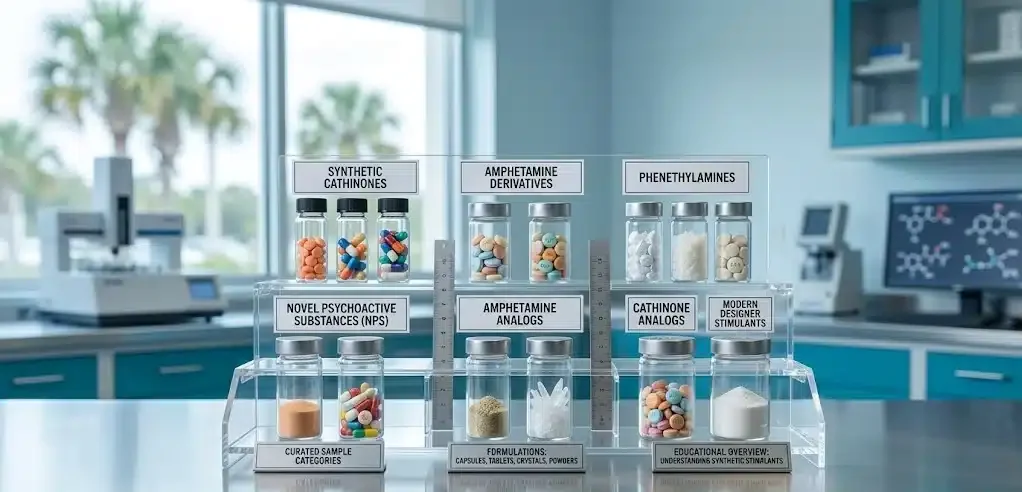
Most synthetic stimulant drugs belong to a group known as synthetic cathinones. These are related to cathinone, a naturally occurring stimulant found in the khat plant. In a lab, however, chemists can create much stronger and more unpredictable versions.
In addition, these substances are part of a broader category called new psychoactive substances. Manufacturers often adjust their chemical structure slightly to bypass drug laws. As a result, new versions appear quickly, even after older ones are banned.
These drugs are inexpensive to produce and widely available online. For example, sellers frequently relabel them as “plant food,” “jewelry cleaner,” or “phone screen cleaner,” often marked “not for human consumption.” In reality, this labeling is misleading and meant to avoid regulation.
Common examples include flakka and substances often referred to as bath salts. While bath salts are one type of synthetic stimulant, they represent just one part of a much larger category. For a closer look, you can learn more about bath salts.
Why Synthetic Stimulant Drugs Are So Unpredictable
One of the greatest risks with synthetic stimulant drugs is their inconsistency. For instance, a batch that seems mild one time may be significantly stronger the next. Since sellers rarely disclose actual ingredients, users cannot accurately judge dosage or potency.
Moreover, these substances are sometimes mixed into pills sold as Molly or ecstasy. Even more concerning, they may be combined with fentanyl, which greatly increases overdose risk.
A common myth suggests that experienced users can identify what they are taking. In reality, the chemical makeup can change from one batch to another. Therefore, a dose that felt manageable before may cause severe harm later.
This unpredictability contributes to a broader national trend. In fact, health experts continue to report rising overdose rates involving combinations of stimulants and opioids. Florida has seen similar patterns, making awareness especially important for local families.
How Synthetic Stimulant Drugs Affect the Body and Mind
Synthetic stimulant drugs overstimulate the central nervous system. Initially, they may create a surge of energy, alertness, or confidence. However, these effects often shift quickly into more harmful symptoms.
Mental effects may include paranoia, intense anxiety, or hallucinations. Some individuals experience severe agitation or fear that feels very real but is not grounded in reality.
Physical effects can be equally serious. These may include dangerously high body temperature, rapid heart rate, and elevated blood pressure. In severe cases, complications can involve kidney failure or cardiac issues.
A common myth compares these drugs to strong caffeine. This is inaccurate, because their effects extend far beyond typical stimulation. They can disrupt both brain and body function in extreme ways.
After the initial effects wear off, many people experience a crash. This may involve exhaustion, low mood, or ongoing anxiety that lasts for days. In some cases, these symptoms require medical attention.
When Use Becomes a Medical Condition
Addiction to synthetic stimulant drugs is a chronic medical condition. Over time, repeated use changes how the brain processes reward, motivation, and stress. These changes can make it difficult to stop without support.
Warning signs include strong cravings, increased tolerance, and continued use despite negative consequences. Sleep problems, strained relationships, and declining performance at work or school often follow.
Families often ask when to step in. If substance use continues despite clear harm, that is a strong signal that help is needed. Other signs include secrecy, financial issues, and sudden mood changes.
Supportive conversations can make a difference. Approaching the situation calmly and offering help tends to be more effective than confrontation or blame.
What Treatment Actually Looks Like
Many people are surprised to learn that there is no FDA-approved medication specifically for stimulant use disorder. Even so, treatment remains effective and well-supported by research.
Behavioral therapies form the foundation of care. Contingency management, which provides incentives for drug-free results, has shown strong outcomes. Cognitive behavioral therapy helps individuals recognize and manage triggers, while motivational approaches strengthen commitment to change.
In some cases, medications may be used off label to support treatment. For example, a combination of bupropion and naltrexone has shown modest benefit in studies focused on methamphetamine use.
Treatment also addresses related health concerns. Anxiety, depression, sleep disruption, and past trauma often occur alongside stimulant use. Managing these factors improves stability and reduces the risk of relapse.
Consistent follow-up plays an important role. Ongoing care helps individuals maintain progress and adjust strategies as needed.
How Solstice Health & Wellness Can Help
Solstice Health & Wellness in Sarasota, Florida treats synthetic stimulant use as a medical condition that can be stabilized and managed. The program combines addiction medicine, primary care, mental health, and lifestyle wellness services in one setting.
Services may include medical monitoring, counseling support, and treatment for related health conditions. Telehealth services are available across Florida, making it easier to access care consistently.
Questions Readers Often Ask
Are synthetic stimulants stronger than cocaine or meth?
Some can be. Certain compounds, such as MDPV and alpha-PVP, can be more potent than cocaine. Even so, strength varies widely by compound and by batch. That uncertainty, more than raw power, makes these drugs risky.
Can someone get addicted quickly?
There is no fixed timeline. Because these drugs strongly affect the brain’s reward system, repeated use can lead to dependence in a relatively short period.
Does treatment work without medication?
Yes. Behavioral therapies are the primary treatment, and their research support is strong. In some cases, off label medications may add further benefit.
A Calmer Path Forward
Synthetic stimulant drugs are complex and often misunderstood. Clear, accurate information can make the situation feel more manageable. Addiction is a treatable medical condition, and effective help is available.
When you are ready to take the next step, support can help restore stability and protect long-term health.
Medically Reviewed By
Frank Melo, MD
Board Certified Addiction Medicine and Family Medicine
Medical Director, Solstice Health & Wellness
Last Updated: June 2026
References
- National Institute on Drug Abuse (NIDA). Synthetic Cathinones (Bath Salts) DrugFacts.
- Riley AL, Nelson KH, To P, et al. Abuse Potential and Toxicity of the Synthetic Cathinones (i.e., “Bath Salts”). Neuroscience and Biobehavioral Reviews. 2020.
- Baumann MH, Solis E, Watterson LR, et al. Bath salts, spice, and related designer drugs: the science behind the headlines. Journal of Neuroscience. 2014.
- Kolesnikova TO, Khatsko SL, Demin KA, Shevyrin VA, Kalueff AV. DARK classics in chemical neuroscience: α-pyrrolidinovalerophenone (“flakka”). ACS Chemical Neuroscience. 2019.
- Gannon BM, Baumann MH, Walther D, et al. The Abuse-Related Effects of Pyrrolidine-Containing Cathinones Are Related to Their Potency and Selectivity to Inhibit the Dopamine Transporter. Neuropsychopharmacology. 2018.
- Guirguis A, Corkery JM, Stair JL, et al. Intended and Unintended Use of Cathinone Mixtures. Human Psychopharmacology. 2017.
- Friedman J, Shover CL. Charting the Fourth Wave: Geographic, Temporal, Race/Ethnicity and Demographic Trends in Polysubstance Fentanyl Overdose Deaths in the United States, 2010–2021. Addiction. 2023.
- Wagner KD, Fiuty P, Page K, et al. Prevalence of Fentanyl in Methamphetamine and Cocaine Samples Collected by Community-Based Drug Checking Services. Drug and Alcohol Dependence. 2023.
- McLellan AT, Lewis DC, O’Brien CP, Kleber HD. Drug Dependence, a Chronic Medical Illness: Implications for Treatment, Insurance, and Outcomes Evaluation. JAMA. 2000.
- Trivedi MH, Walker R, Ling W, et al. Bupropion and Naltrexone in Methamphetamine Use Disorder. New England Journal of Medicine. 2021.
- The ASAM/AAAP Clinical Practice Guideline on the Management of Stimulant Use Disorder. Journal of Addiction Medicine. 2024.
- Ronsley C, Nolan S, Knight R, et al. Treatment of Stimulant Use Disorder: A Systematic Review of Reviews. PLoS One. 2020.
Medical Disclaimer: The information provided on this page is for educational purposes only and is not a substitute for professional medical advice, diagnosis, or treatment. Always seek the advice of a qualified healthcare provider with any questions you may have regarding a medical condition.