
Vaping Addiction Treatment in Sarasota, FL

Understanding Vaping Use Disorder
Vaping addiction treatment in Sarasota, FL is becoming more important as e-cigarette use rises among teens and young adults. In fact, e-cigarettes are now the most common nicotine product used by people under 25. In many cases, those who become addicted to nicotine through vaping have never smoked a traditional cigarette. As a result, this creates a different and often overlooked clinical challenge.
Unlike smoking, vaping carries a different set of health risks and a different patient profile. Treatment, in turn, requires considerations beyond standard smoking cessation. These include unique product characteristics, behavioral patterns, and persistent misconceptions about safety.
At Solstice Health & Wellness in Sarasota, outpatient vaping addiction treatment integrates addiction medicine, primary care, and mental health care. Treatment plans, in addition, address the nicotine dependence and the mental health conditions that sustain continued use. Telehealth is also available throughout Florida for patients who cannot come in person.
If vaping has affected your health, concentration, or daily life, help is available.
What Is Vaping?
Vaping involves breathing in an aerosol made by a battery-powered device. This device heats a liquid that contains nicotine, flavoring, and other chemicals. Several device types are in common use today.
For example, disposable vapes like Lost Mary, Elf Bar, Puff Bar, and Breeze are used once and then thrown away. In contrast, pod systems such as JUUL and STLTH use replaceable pods. Because of their small, USB-like design, they became popular in schools. Meanwhile, larger devices called mods use refillable tanks and allow higher nicotine levels.
Specifically, most pod-based products use nicotine salts rather than freebase nicotine. Salts allow higher concentrations to be inhaled without harshness. As a result, popular pod systems often contain 50 milligrams per milliliter or more of nicotine. By comparison, most conventional e-cigarettes contain roughly 12 milligrams per milliliter.
Street terms include vapes, e-cigs, JUULing, ripping, hitting a pod, and nic pens. Most people who start vaping are young. Research consistently shows that first use occurs most often between ages 15 and 21. Common reasons include flavored products, peer use, and social media exposure. Many also start because of a widespread belief that vaping is safer than smoking.
Some devices are also used to inhale cannabis oil or THC concentrates. Clinically, this distinction matters for health. Vitamin E acetate in some illicit THC vaping products has been linked to EVALI, a serious lung condition covered below.
Risk Factors for Vaping Use Disorder
Not everyone who tries vaping develops dependence, but certain factors raise the risk considerably.
Genetics can affect how easily a person becomes dependent on nicotine. A family history of nicotine or substance dependence increases the likelihood of developing vaping use disorder.
Additionally, age at first use is especially significant. Adolescent brains are more responsive to nicotine’s rewarding effects, and dependence forms more quickly. Early exposure also increases the risk of lifetime addiction.
Furthermore, mental health conditions are closely connected to vaping risk. Anxiety, depression, and ADHD all correlate with higher rates of nicotine use. Because nicotine temporarily improves focus and reduces anxiety, these patients often self-medicate through vaping, reinforcing continued use.
Social and environmental factors also play a role. Peer vaping and social media exposure to influencer-driven content raise the risk of starting. So does the presence of appealing flavors designed to attract younger users.
Why Is Vaping Addictive?
When inhaled, nicotine reaches the brain in seconds. It activates nicotinic acetylcholine receptors, proteins that sense nicotine and trigger dopamine release. Repeated activation reinforces the behavior and produces tolerance over time.
What sets vaping apart from traditional cigarettes is the nicotine delivery profile. Nicotine salts in pod devices allow much higher concentrations to reach the brain per puff. A single pod delivers roughly the nicotine equivalent of one pack of cigarettes. Heavy multi-pod users may approach two-pack nicotine equivalence, placing their daily intake well above that of most cigarette smokers.
Vaping is also uniquely reinforcing because of its availability. Unlike cigarettes, a vape is always on hand and can be used discreetly in seconds. Cigarettes require going outside and take several minutes, which naturally limits frequency of use. This constant access removes the natural pauses that limit cigarette use and creates a near-continuous nicotine feed throughout the day.
Behavioral conditioning deepens the dependence. Vaping becomes paired with specific states, including stress, boredom, and social situations. These cues trigger cravings regardless of blood nicotine levels. Among young adults who have vaped daily for two or more years, unassisted quit rates are very low. For heavy daily vapers, one-year success without support is estimated below five percent. This figure is largely extrapolated from combustible tobacco data.
Health Effects of Vaping
Vaping aerosol is not just water vapor. Instead, it contains fine particles, chemicals, and metals that interact with respiratory and cardiovascular tissues. Many of these effects are distinct from those caused by combustible tobacco.
Vaping is not a safe alternative to smoking. For young or nicotine-naive individuals who have never used tobacco, vaping introduces health risks and nicotine dependence with no harm-reduction purpose.
Short-Term Effects of Vaping
- Throat and airway irritation
- Dry mouth, cough, and reduced taste
- Increased heart rate and blood pressure
- Dizziness or headache
- Temporary breathing changes
Long-Term Effects of Vaping
- Ongoing airway inflammation
- Reduced lung function
- Increased heart stress
- Effects on adolescent brain development
- Uncertain long-term health effects
Risks of Vaping
- EVALI (vaping-related lung injury)
- Nicotine poisoning
- Battery fires or explosions
- Increased risk of smoking cigarettes
- Excess nicotine exposure in dual users
Signs & Symptoms of Vaping Use Disorder
Vaping addiction is often overlooked because e-cigarettes are easy to hide, produce little odor, and are widely accepted in many social settings. However, nicotine vaping can lead to the same type of dependence seen with other tobacco products.
Recognizing the signs early can help determine when professional support may be beneficial.
Physical Signs
- Waking up at night or very early to vape
- Headaches between vaping sessions
- Increased appetite and weight gain when quitting
- Restlessness or irritability when unable to vape
- Carrying a vape device at all times
- Increased dosing or strength for same effect
Psychological Symptoms
- Urges to vape triggered by settings or emotions
- Mood swings linked to vaping patterns
- Vaping to manage stress or anxiety
- Low mood when cutting back or quitting
- Thoughts about when or where to vape next
- Difficulty concentrating without nicotine
Behavioral Signs
- Unsuccessful attempts to quit
- Vaping in places where it is not allowed
- Planning activities around vaping access
- Vaping in bathrooms or hiding to avoid detection
- Spending money on devices, pods, or e-liquid
- Continuing to vape despite problems
Do I Have a Vaping Use Disorder?
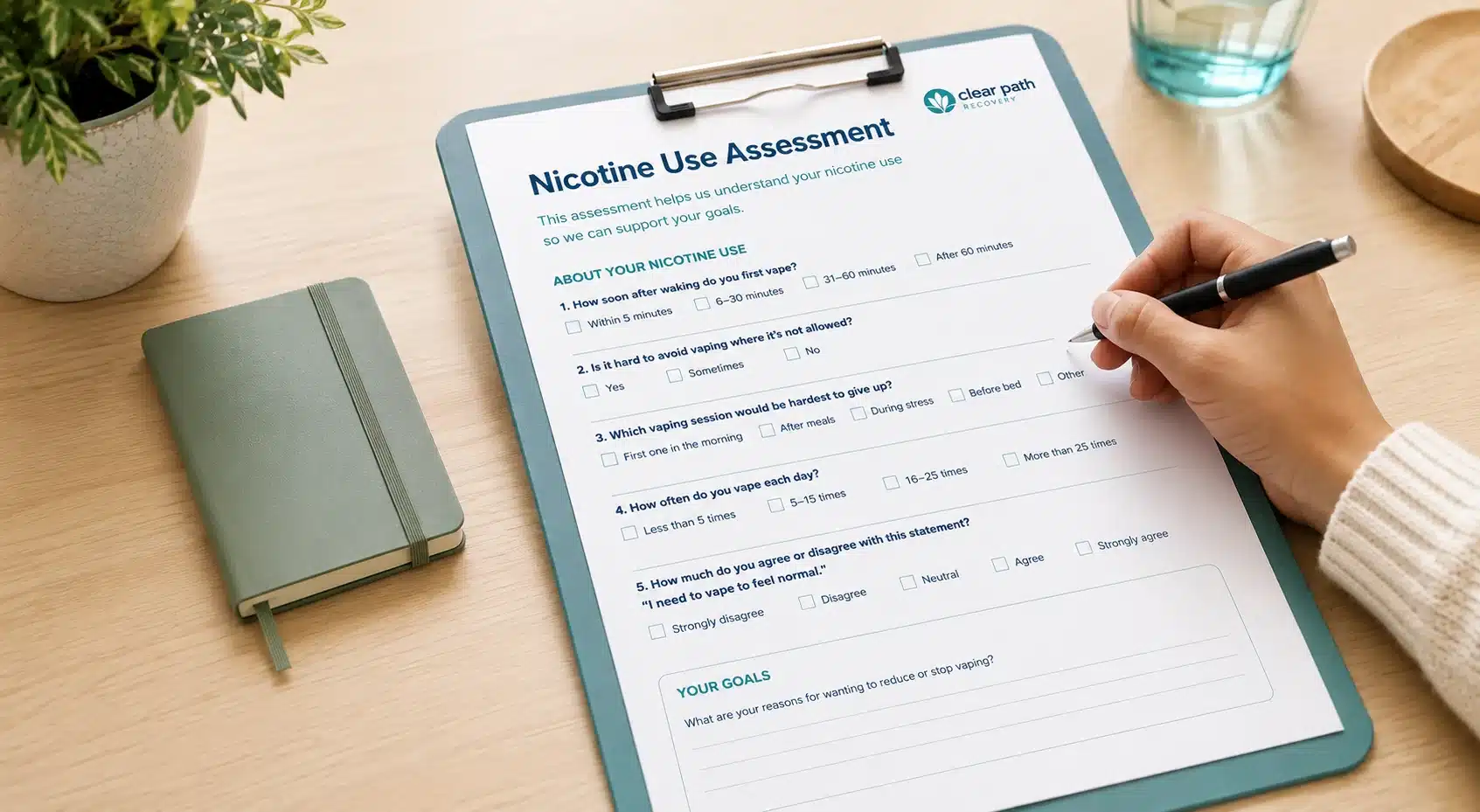
If going without a vape affects your mood, concentration, daily routine, or ability to function, a screening assessment can help measure the severity of nicotine dependence.
Our Nicotine Use Assessment includes validated Fagerström screening tools for vaping, cigarettes, and smokeless tobacco. The assessment provides immediate feedback and can help determine whether additional support may be beneficial.
Take the Nicotine Use Assessment.
While a screening score is not a diagnosis, it can help identify a problematic pattern of nicotine use that may warrant further attention.
Nicotine Withdrawal from Vaping: Symptoms, Timeline & Detox
Withdrawal Symptoms
- Irritability, frustration, and a shorter temper
- Anxiety and heightened sensitivity to stress
- Difficulty concentrating and mental restlessness
- Increased appetite and weight gain
- Insomnia or disrupted sleep patterns
- Persistent urges to vape, often triggered by familiar settings
- Depressed mood in the first days after stopping
Withdrawal Timeline
Nicotine withdrawal from vaping follows a similar timeline to cigarette withdrawal. Intensity can be greater in heavy pod users, however, because of the higher daily nicotine load.
Typically, symptoms begin within four to twenty-four hours of the last use. The first two to three days are the most difficult, and most unassisted quit attempts fail during this window. By one to two weeks, the acute physical symptoms generally improve. Cravings, however, can persist for months, often triggered by familiar cues rather than physical need.
Unlike alcohol or benzodiazepine withdrawal, nicotine withdrawal from vaping is not medically dangerous. It is intensely uncomfortable, though, which is why most young vapers who try quitting alone do not succeed.
Vaping Detox & Withdrawal Management
Outpatient management with medication substantially reduces withdrawal severity and improves quit rates. A physician can start varenicline or bupropion before a quit date, allowing therapeutic blood levels to build before withdrawal begins. Nicotine replacement therapy provides controlled nicotine doses through patches, gum, or lozenges. This removes the behavioral reinforcement of the vaping device.
Because heavy vapers often consume more nicotine per day than a pack-a-day smoker, standard NRT patch doses may be insufficient. Physicians may adjust doses upward or use combination NRT to match the patient’s actual nicotine intake. Telehealth visits manage evaluation, prescriptions, and follow-up effectively for most patients.
Vaping Addiction Treatment Options
Levels of Care
Vaping use disorder is almost always treated in an outpatient setting. Intensive outpatient or residential care is not typically required for nicotine alone. Treatment rests on medication, behavioral support, and scheduled follow-up visits to monitor response and adjust the plan.
In some cases, patients who also use cannabis, alcohol, or other substances alongside vaping may need a more coordinated approach.
Vaping Cessation Medication
No medication currently carries FDA approval specifically for e-cigarette cessation. In practice, however, the same medications used for cigarette cessation are prescribed off-label. Both clinical experience and emerging trials show meaningful benefit.
Varenicline, the active ingredient in the original Chantix formulation, is the most studied option for cessation. It shows the strongest quit rates across both smoking and vaping populations. It reduces both withdrawal discomfort and the rewarding effect of vaping if a relapse occurs. Generic varenicline is now the widely available form following a 2021 brand recall. A standard course runs twelve weeks, extended to twenty-four weeks for patients who need continued support.
Bupropion SR addresses both nicotine craving and withdrawal through its dopamine and norepinephrine effects. It is especially useful for patients with co-occurring depression, since it treats both conditions simultaneously.
Nicotine Replacement Therapy comes in long-acting forms, including the patch, and short-acting forms such as gum, lozenges, and nasal spray. Combining a long-acting and short-acting form produces better outcomes than either alone. Importantly, heavy pod users often require higher NRT doses than standard cigarette cessation protocols recommend.
Co-Occurring Health Conditions
Vaping use disorder frequently co-occurs with mental health and other substance use conditions. ADHD and anxiety disorders are particularly common, since nicotine provides short-term relief for both. Treating these conditions alongside vaping dependence significantly improves outcomes for each.
Cannabis use often overlaps with vaping, especially among younger patients who use multifunctional devices for both nicotine and THC. Dual use with cigarettes is also common and requires medication strategies that address both substances. Cardiovascular and respiratory conditions made worse by vaping are also managed alongside cessation treatment.
Evidence-Based Behavioral Therapies
- Cognitive behavioral therapy targeting vaping-related thoughts, safety misconceptions, and situational triggers
- Motivational interviewing that addresses the specific health concerns unique to vaping, including EVALI, unknown long-term effects, and daily nicotine load
- Behavioral activation to replace vaping routines with incompatible activities and restructure daily cues
- Brief physician counseling, which improves quit rates measurably even in short clinical encounters with young adults
Psychosocial Supports & Harm Reduction
- EX Program by Truth Initiative and Mayo Clinic: a free, evidence-based digital quit program with personalized plans and text message support designed for vapers and young adults
- SmokefreeTXT: a text-based quit program providing real-time support between appointments, available for teens and adults
- Tobacco Free Florida: covers vaping cessation alongside smoking, with free nicotine replacement therapy, telephone coaching, and the 1-800-QUIT-NOW quitline
- Harm reduction approaches for patients not ready for immediate cessation, including reducing vaping frequency, switching to lower nicotine concentrations, and structured step-down plans
Vaping Addiction Treatment in Sarasota, FL
Many people who seek vaping addiction treatment are surprised by how difficult quitting can be. Despite a strong desire to stop, nicotine cravings, withdrawal symptoms, and daily vaping routines often make repeated quit attempts unsuccessful.
However, effective treatment addresses both the physical addiction and the behavioral patterns. With the right support, many people successfully quit.
At Solstice Health & Wellness, vaping addiction treatment is tailored to the individual. In particular, patients seeking e-cigarette addiction treatment in Sarasota will find physician care built around their health history. Because anxiety, depression, and other mental health conditions commonly overlap with nicotine dependence, treatment plans address these concerns when appropriate.
Whether you are struggling with JUUL addiction, disposable vape dependence, or long-term nicotine vaping, treatment can help you regain control and move toward a nicotine-free lifestyle.
Is It Time to Get Help for Vaping?
What often starts as an occasional habit can gradually become a daily source of nicotine dependence, making it harder to cut back than expected.
If you find yourself reaching for a vape shortly after waking, vaping more often than intended, or struggling with cravings when you try to stop, it may be time to seek additional support.
Fortunately, effective treatment options are available. With the right treatment and support, many people successfully overcome nicotine dependence and stop vaping for good.
Frequently Asked Questions About Vaping Addiction Treatment
Medically Reviewed By
Frank Melo, MD
Board Certified Addiction Medicine and Family Medicine
Medical Director, Solstice Health & Wellness
Last Updated: June 2026
References
- Jamal A, Park-Lee E, Birdsey J, et al. Tobacco Product Use Among Middle and High School Students – National Youth Tobacco Survey, United States, 2024. MMWR Morb Mortal Wkly Rep. 2024.
- Rose JJ, Krishnan-Sarin S, Exil VJ, et al. Cardiopulmonary Impact of Electronic Cigarettes and Vaping Products: A Scientific Statement From the American Heart Association. Circulation. 2023.
- Prochaska JJ, Vogel EA, Benowitz N. Nicotine Delivery and Cigarette Equivalents From Vaping a JUULpod. Tob Control. 2022.
- Becker TD, Arnold MK, Ro V, Martin L, Rice TR. Systematic Review of Electronic Cigarette Use (Vaping) and Mental Health Comorbidity Among Adolescents and Young Adults. Nicotine Tob Res. 2021.
- Blount BC, Karwowski MP, Shields PG, et al. Vitamin E Acetate in Bronchoalveolar-Lavage Fluid Associated with EVALI. N Engl J Med. 2020.
- Neczypor EW, Mears MJ, Ghosh A, et al. E-Cigarettes and Cardiopulmonary Health: Review for Clinicians. Circulation. 2022.
- Piper ME, Baker TB, Benowitz NL, Smith SS, Jorenby DE. E-Cigarette Dependence Measures in Dual Users: Reliability and Relations With Dependence Criteria and E-Cigarette Cessation. Nicotine Tob Res. 2020.
- Evins AE, Cather C, Reeder HT, et al. Varenicline for Youth Nicotine Vaping Cessation: A Randomized Clinical Trial. JAMA. 2025.
- Williams BS, Kasza KA, Hyland A, et al. Predictors of E-Cigarette Quit Attempts and Cessation in Young Adults. Pediatrics. 2026.
- Butler AR, Lindson N, Livingstone-Banks J, et al. Interventions for Quitting Vaping. Cochrane Database Syst Rev. 2025.
Medical Disclaimer: The information provided on this page is for educational purposes only and is not a substitute for professional medical advice, diagnosis, or treatment. Always seek the advice of a qualified healthcare provider with any questions you may have regarding a medical condition.